 |
| more we see, more we have not seen, until we see the seer |
Picture abhi baaki hai...hamesha (((Hindi for: The movie ain't over yet...always)))
"Customer should be the starting point in the business."
"Customer should be the central point in the business."
We have all heard this !!!
"So, then look for the pain points of the customer."
"What are you solving for through your product?"
"What cultural tension are you addressing?"
"What value are you adding to the customer?"
"What job is it that the customer wants to get done, for which your product is hired or bought?" (((Clayton Christensen, Legendary Harvard Professor followed by people like Steve Jobs)))
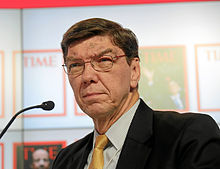 |
| https://en.wikipedia.org/wiki/Clayton_Christensen |
And we have all heard this too !!!
And there are zillions of products and services across the world.
Attempting at meeting the above definitions.
According to one Harvard Business Review article, Thirty thousand new consumer products are launched each year. But over 90% of them fail—and that’s after marketing professionals have spent massive amounts of money trying to understand what their customers want. What’s wrong with this picture? Is it that market researchers aren’t smart enough? That advertising agencies aren’t creative enough? That consumers have become too difficult to understand?
Let's park this for some moments.
Now, the world already has a zillion different product and services. And these products or services are hired/bought by the customer to do some job?
The question is, " Are all jobs legitimate?"
Or in other words, "When the customer wants to get a job done, is the customer aware that that job is really really required?"
Or in other words, "what feature or filter does the customer need to have in order to figure out the real deep need for the job to be done?"
Or may we ask, "having used the feature/filter to figure out deeply the need for the job, does the customer need to give in and get the job done? There are aspects of self-control and or being upright that would make people not really do the job all the time?"
Or could it be the case that the customer has conflicting jobs to be done and ends up getting one or few of them done because of various reasons of physiology, emotional, psychological or social.
The famous saying, "people buy things that they don't need with the money that they don't have to impress people that they don't like".
In fact, if stretch the arguments in favor of "markets", then the tenet that customers (humans) want choices. "choice" is good...choice is liberating...echoes all the way to infinity.
The challenge is that too many choices leads to
 |
| https://en.wikipedia.org/wiki/Barry_Schwartz_(psychologist) |
- action paralysis (Barry Schwartz, American Psychologist)...or
- it so happens that one feels guilty of not choosing the other, while not savoring the one chosen
- sometimes one endows way too much importance to that which is chosen, because one is not able to reconcile and signal to others that they made a wrong choice
So, now lets recount two fundamental challenges,
a. Customer's understanding of job to be done and deeper reflection of its real need to be done or not,
b. Paradox of choice.
So far, so good !!!
There are theories around how to find out "what job the customer needs to be done?".
Some say, "ask the customer". Naysayers to this would argue that the customer either
- doesn't know or
- can't articulate or
- gives socially desirable answers or
- doesn't know what he doesn't know
Some say, "observe the customer". Naysayers to this would argue that the observer either
- isn;t really trained in thorough observation
- is governed by impulses and biases
- is trying to fit the observation to the problem at hand and/or the hypothesis
- doesn't observe adequately
Hmmm!!!
So, we now know that when we try to solve for something or address a pain point or develop a value proposition or help get a job done, there are inherent human limitations.
The idea is not to get saddled with these.
Albeit, create ways and means to overcome them.
One of the argument against the above framing could be that, "Look! There are so many successful products and companies. They obviously are getting things right! Aren't they?".
And the answer is "Yes and...
Yes and that this is partial.
Yes, there have been progress.
But that doesn't mean that the world is alleviated of all of its problems and suffering.
And it is also not to say that there would be a day when all the problems would indeed be alleviated.
And i need to mention that one is also not asking that only Utopia would do and anything less is regress.
What we mean to say that we need to weigh in both the progress and the challenges.
We need to certainly celebrate the various things achieved...lower infant mortality, lower pregnancy related deaths, lower diseases like polio, etc, scientific adavancement leading to several conveniences of living and travel... (Steven Pinker, Harvard, in his book "Enlightenment Now").
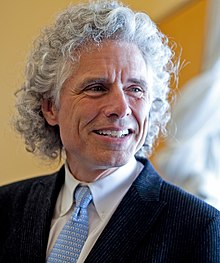 |
| https://en.wikipedia.org/wiki/Steven_Pinker |
The world today has way way more conveniences than just a 100 years back, and yet people feel more inconvenienced at the slightest of bump in their paths. Maybe our patience quotient is drastically down. Or maybe our aspiration or expectation quotient is drastically shot up. Or a combination of both.
The world has cheapest mode to travel and communicate, and yet loneliness is on the rise.
The world has many avenues to experience pleasures, and yet the pain is on the rise.
The world has way more entrepreneurs and yet the unemployment is on the rise.
The world has made great progress through reason and science and humanity, and yet there are newer challenges
 |
| https://www.worldfuture.org/members/1228445 |
This is what Benjamin Butler (Futurist) calls "The Great Paradox of our Times".
Organizations might need to not only look at "what job does the customer wants to be done?", but also create platforms for enabling customer to deeply look at the "jobs to be done". Through various contemplative and reflective practices.
Organizations might need to enable people become deeply aware of their shortfalls and incompletions...their blessings and their gifted abilities...the complexity of human life and relationships...
...their products need to dovetail these
and no matter what an organization is able to achieve, such is the human life that there would always be things yet to be done and improved...
...hence the movie ain't over yet...always


No comments:
Post a Comment